Roxanne and Lisa
“Hello big dog¨.
A gentle giant pads into our field of vision as we enjoy a perfect afternoon on the lakeside at Logroño. And two German girls with monster rucksacks shout out a cheery “Hola”.
“How’s your dog like the Camino”? we ask them.”Roxy’s not used to long walks” replies the tall one in Spanish.
“Her feet feet are a bit sore, so we’re taking it really slow “. Mmm… its not so easy to do the Camino with a dog then?”
“Camino hostels won’t take Roxy so we sleep outdoors under a kind of a shelter… its called A TARP?” she says TARP in English. We nod.
“Oh yes we know… a TARP.
“Great” we say”, but your pack must be heavy with all that dog food”!
“My parents wanted me to bring the dog,she’s mine. They weren’t happy for me to travel alone, so they told me I had to take Roxanne”.
“She’s a lovely dog” we reply as we pat Roxy’s wide head. Her eyes roll upwards to meet our touch.
“Buen Camino” we say by way of goodbye.
“Buen Camino” echo the girls as Roxy pulls them sharply towards cool lake water.
“Oh I wish we had Ghyllie here” says Mark.” I miss him sooo.”
We meet up with Roxanne and Lisa again on our way into Burgos. Roxy is pleased to see us.
“Where’s your friend”? we ask .”Friend?… Oh she was just someone I was walking with. She’s German and so is my mum so we chatted a while then we went our separate ways.
Roxanne is the kind of dog that protects sheep in Italy and she keeps us closely bunched together while we have a lively chat all the way from the city limits into the centre. What are her motivations for coming on the Camino, we wonder. Lisa has a happy home, she says, living in the country with her parents, dogs and horses. She helps her dad out with forestry, but…
“I am a dropper outer” she confides. “Really”? “We are genuinly surprised.
“I can’t stick anything, I start things, but I leave, I don’t know what I want to do and thats why I’m on the Camino”.
“Yeah” says Mark “You can forget everything else but the walk” for The Camino has this effect on him.
“No, it’s the exact opposite”, says Lisa.”Travelling on my own gives me time to think. My mind is full of home, my family, my problems. I’ve had lots of time to go back over my life and think about it. Its a real help”.
“But you haven’t dropped out of THE CAMINO,” we say.” Bet your parents didn’t think you’d stick it out”!
“Yeah they’re really surprised, they can’t believe it”.
“You see your a sticker outer now. You’ve changed” I say. Lisa tells us she wouldn’t have been here now had it not been for a stranger she’d met along the way.
“I left my car at Somport in the Pyreneesand began to walk but I hated it. After just a few days I wanted to leave, just stop. It was awful, but I met a German man, a pilgrim. He was very stern. He gave me a BIG telling off.
“Your life is too easy,” he said ” You’re a really spoilt kid, when the going gets tough you just drop out. It’s disgraceful. Life’s not like that, you’ve got to put up with discomfort and persevere. Stop making a big fuss, pull yourself together and get on with it. People don’t want to hear your moaning.” “So I gave it another go.” Lisa smiles and we laugh together.
“I have that man to thank. It was just what I needed. He was right and here I am”.
“You must be proud of yourself “we say and tell her how brilliantly she’s done. We feel as proud as parents. “You are an inspiration to my younger self!” I say.
Chupito and Marlene
We are eating lunch on a pleasant hill-side under pines when a girl appears with a donkey. Our eyes follow their slow progress down the hill.
“Why d’you reckon they’re going contra-flow? I ask Mark. “I dunno” Mark replies. ” She’s got dreads” I say.
“Yeah” says Mark.
“I’m going to say hello” I say as I leap to my feet sandwich in hand ” I’m going to find out her story”.
I dash along the hill-top barefoot. Great they’ve stopped on the track for a chat with some pilgrims. ” Wait” I shout . …. as the pilgrims hand her something and part. I call out to her in Spanish as I make my way down the prickly incline. “I want to say Hello”!
The girl is in her twenties, she has light leather sandals and a lime-green day pack. She looks a bit bewildered. I jump out onto the trail in front of her like a bandit.
“Can I say hello to your donkey”?
The donkey is one of those big dark brown ones with soft eyes and he’s laden with a traditional set of woven paniers, he is un-startled at my breathy approach. “Can I give your donkey a bite of my bocadillo”? Velvet lips are reaching gently for my sandwich.
“Here” says the girl and hands me a piece of the crispiest toastiest sun-dried bread flipped out from under the pommel of the saddlepack. “This is better for him”. I feed the toast to the grateful donkey.
“What’s his name ?” …. ” Is he a donkey or a mule?
” He’s Chupito and he’s a mule” says the girl.
She is patient and kind though, she says, they’ve met more than 600 people in the six weeks they’ve been travelling from Santiago and they all want to pet Chupito. She says she is Marlene, is French and No she doesn’t live on the Camino.
“This is just a” viaje- a trip!
She tells me how she bought Chupito in Andalusia.”He was “muy barato”she says repeating the words “muy barato”very cheap for emphasis. Poor Chupito, it turns out that the price was low because he was deranged. He’d had been badly treated and didn’t trust anyone.
“He was actually really dangerous when we set out” says Marlene. But we’ve been together all the time, we trust each other and he’s a very good mule now.”
“But… what will happen to Chupito at the end of your journey ?” I ask, concerned.
“He’s going to live at a monastery run by Buddhist nuns! The nuns are really kind and they’ll care for him in a meadow they have there. ”
We smile with relief at the happy ending of Chupito’s tale.
Marlene opens her palm to reveal three gold coins. LOOK I’ve got money. ” she says “I’m going into town for a COFFEE”!
The Camino Dreamcloud Vision
It’s late evening and our map shows a campspot between us and the autopista. An all-terrain vehicle is raising dust further down the trail.
¨I think they´re going to camp there. Let’s go to the next camp-spot.”
We watch as two men get out of the truck and mosey around the campspot. “What d’you think they are doing?”I ask Mark.
“I dunno” says Mark.
Soon they are back in the car and making a new trail of dust back up tthe hill towards the setting sun. They turn around at a huge stack of barley straw and once again descend the hll in our direction.
“What’s going on?” I say, as they drive our way.
As they pass us they stop and hang out of the window to apologise for raising such a dust storm with their comings and goings.
“Have you seen the boy and the girl? Says the tall dark-haired guy in American English. “No! ” Which Boy and which Girl”?
We are puzzled.
“The ones with a horse and a dog” they say.
“We haven’t seen any teenagers walking the Camino.”No” we say. ‘We haven’t seen them with a horse and a dog.”
Driver and passenger turn, so they can look back up the hill. Small figures are coming down the trail.
“They’ll be here soon. We’re their support vehicle” say the men”.We’ve been down to check out the camp-spot. It’s nice and quiet.”
“So…. who are THEY”? says Mark curious “What’s their story?”
“They are two teenagers with really severe behavioural difficulties. The idea is they have each rescued an animal from an animal sanctuary in Andalusia and walked with them along the Via de la Plata pilgrim trail to Santiago.We’re piloting a scheme to see if we can help kids with these kinds of problems. If it works then the government will roll it out. They’ve been walking for six weeks. There’s a social worker with them, they are camping along the route and we are carrying the gear, food and so on in the back-up vehicle”.
The back of their vehicle is full of stuff.
“So..um…where are they walking to”?
“Oh” says the driver who has a grey stubbly beard and sounds German.”They’re walking over the Pyrenees to Germany”.
It sounds as if he’s telling us that the children will be walking over the hill to the next village.
“They are walking to Germany”?We look at each other and back to them in disbelief.
“Yes, Germany, we hope they’ll be cured when they arrive.Oh excuse us, we’ve gotta go they mustn’t see us talking to you.” says the American. “Buen Camino”!
“Buen Camino” we reply.
The driver hits the accelerator and they are gone leaving a white puffy cloud shortly to be filled by a blonde girl on a snow white horse, a woman with a pack, a spotty boy with an inward looking gaze and a striking blue-eyed dog in a neckachief.
“Buen Camino” we say to them, but they inhabit another dimension and don’t hear us. As they pass by the pony breaks into trot and the girl shrieks clutching the mane. No bridle, no saddle, no collar, a holy-vision bathed in straw-coloured evening light. Our eyes fill with tears at the wondrous beauty of it all.
“I wonder how long it will be” says Mark “before they can begin to trust people again?”
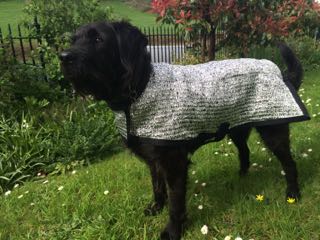
 Anna has contributed this image of her black cob pony, Maisie, her poem, “Daily improvisation” and “Truffle Speaks” an experimental “Speaking As” audio piece to the lovely project, “A Soft Landing.”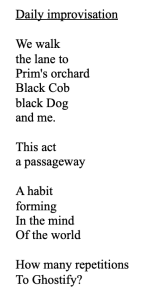



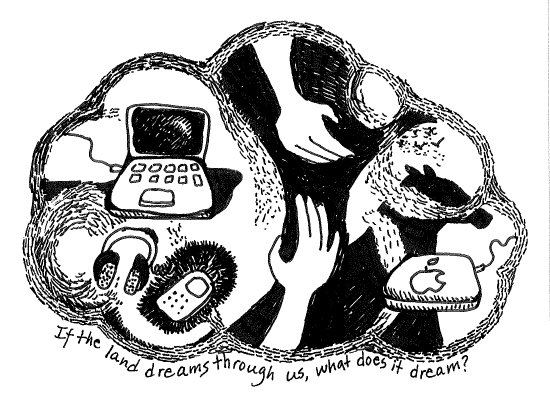 Sometimes in the borderlands, Claire and I felt like authors. The way we were invited into people’s homes, the way we were recommended to seek out others. When people heard we were doing
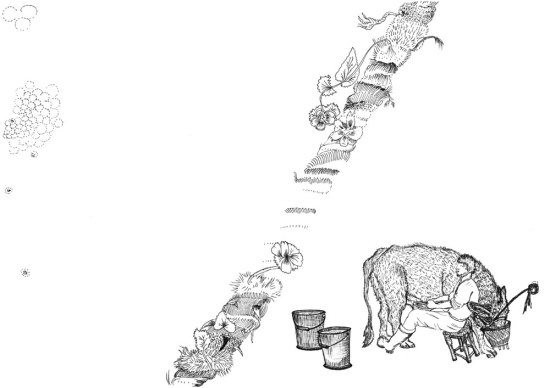






















 DREAMING PLACE
